
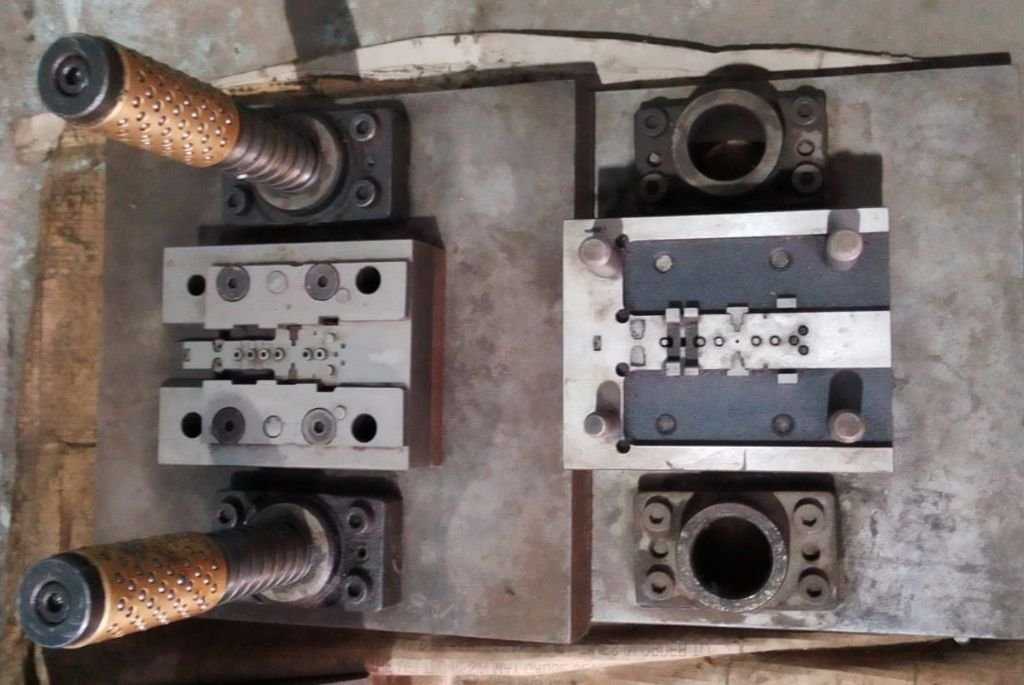
In the fast-advancing Indian manufacturing sector, the base of wide-ranging, high-level accuracy components rests on sheet metal progressive die technology. The automotive industry in Pune and Chennai, along with the electronics industry in Noida and Bengaluru, have high requirements for effective and affordable production methods, which makes sheet metal progressive die an indispensable device for industry.
What is a Sheet Metal Progressive Die?
A sheet metal progressive die has specialized tooling tailored for use with stamping presses to cut and form sheet metal into finished parts. Unlike single-stage dies, where one cut or bend operation is performed sequentially, progressive sheet metal dies complete multiple tasks in a single press cycle. The strip of sheet metal moves through various stages, and the desired product is achieved after passing through all the stations.
The need for sheet metal progressive die technology has surged due to the rapid growth of the automotive and aerospace industries in India. Manufacturers heavily depend on this technology to maintain quality standards while keeping production costs low due to the large volume of parts that have to be produced, which have high tolerances and complex geometries.
Sheet Metal Progressive Die Design: Key to Efficiency
As with any stamping die design, its developmental engineering is based on making the system optimal. The approach of design on die systems for progressive stamping requires higher-order thinking to make sure there is optimal material flow, waste minimization, and, most importantly, accurate part production. Specialized engineering firms and tool room companies engage in the making of designer progressive sheet metal dies based on client needs in the industrial clusters of Gurugram and Rajkot.
In India, a deep study of material parameters such as thickness, type of sheet metal (aluminium, stainless steel, etc.), die clearance, and the overall intricacy of parts is conducted for sheet metal progressive die design. The computer-aided design and simulation ‘what-if’ tools are so advanced in India that downstream processes are guaranteed to be free from expensive mistakes and standstill periods.
Also read: Sheet Metal Die: Bhavesh Enterprises Leading the Way in Bhiwadi, Rajasthan
Applications of Sheet Metal Progressive Die in India
The sheet metal progressive die systems have steadily increased in popularity across all sectors in India because of their adaptability:
Automotive: Aiding Indian vehicle manufacturers such as Tata Motors, Mahindra, and Maruti Suzuki with progressive sheet metal dies to assist in bracket production, connector assembly, and structural bolster manufacture in volume through automation.
Consumer Electronics: In Noida and Bengaluru, mobile phones and appliances are designed with advanced technology. The progressive die excels in the mass production of complex metal structures for mobile phones, laptop casings, and other electronics.
Electrical: In Mumbai and Vadodara, contacts, switches, and connectors are manufactured through progressive sheet metal dies of very intricate details.
Aerospace and Defense: The indigenization focus of India is on the upswing. Hence, an increasing value of precision placed on parts manufactured for the aerospace industry is driving the use of progressive sheet metal dies for their repetitive accuracy.
The Future of Sheet Metal Progressive Die in India
There will be an increase in the use of sheet metal progressive die technology in India owing to the increased demand for indigenously manufactured parts and the government’s “Make in India” initiative. The Tool and die designers in industrial hubs like Pune, Gurugram, and Ahmedabad are purchasing sophisticated equipment, including computer-aided design workstations, to train the skilled workforce to satisfy the demand for progressive sheet metal dies.
Additionally, because of digital change and Industry 4.0, several Indian businesses are now equipping their sheet metal progressive die manufacturing and design processes with IoT sensors and data analytics. This not only optimizes performance but also guarantees quality control and traceability.
Conclusion
To summarize, the Indian manufacturing industry, and in particular the auto and electronics sectors, depends heavily on high-speed, precision complex part production, which is possible due to sheet metal progressive die technology. With a growing acceptance of progressive die design coupled with bold investment from Indian manufacturers, the Indian manufacturing sector can compete with global players.
Investing in a non-woven sheet metal progressive die system will serve India’s manufacturing vision, especially for those looking to establish a project focused on precision metal components.